
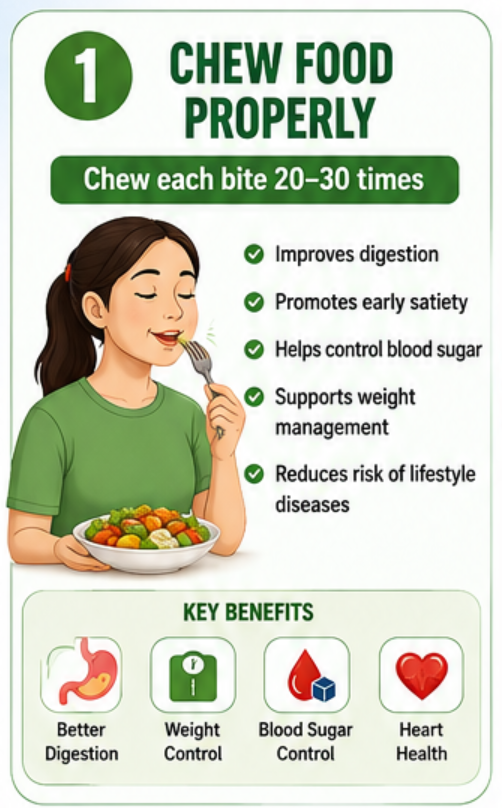
Chewing Food Properly (20–30 Times per Bite)
Proper chewing is one of the simplest lifestyle modifications that can improve digestion, reduce overeating, and contribute to better metabolic health.
1. Promotes Early Satiety and Reduces Overeating
- Chewing slowly gives the brain time to receive fullness signals from the stomach.
- Satiety hormones such as GLP-1, PYY, and CCK are released more effectively when food is eaten slowly.
- People who chew more tend to consume fewer calories during meals.
Benefit: Helps prevent obesity and supports long-term weight control.
2. Improves Digestion
- Digestion begins in the mouth.
- Thorough chewing breaks food into smaller particles, increasing the surface area for digestive enzymes.
- Saliva contains enzymes such as amylase that start carbohydrate digestion.
Benefit: Better nutrient absorption and reduced indigestion, bloating, and acidity.
3. Helps Control Blood Sugar
- Slower eating and better chewing reduce rapid spikes in blood glucose after meals.
- Improved digestion and gradual absorption help maintain stable insulin responses.
Benefit: May reduce the risk of insulin resistance, prediabetes, and Type 2 diabetes.
4. Supports Healthy Weight Loss
- Studies show that slow eaters generally have lower body weight and waist circumference than fast eaters.
- Proper chewing naturally reduces portion sizes without conscious calorie restriction.
Benefit: Sustainable weight management without extreme diets.
5. Reduces Risk of Metabolic Syndrome
Metabolic syndrome includes:
- Central obesity
- High blood pressure
- High blood sugar
- High triglycerides
- Low HDL cholesterol
Slow eating and adequate chewing have been associated with a lower prevalence of these risk factors.
Benefit: Reduced risk of heart disease and diabetes.
6. Enhances Gut Health
- Larger food particles reaching the intestine may be harder to digest.
- Better-chewed food is processed more efficiently by the gut microbiome.
Benefit: Improved bowel function and reduced gastrointestinal discomfort.
7. Lowers Stress During Meals
- Mindful chewing encourages slower, more relaxed eating.
- It activates the parasympathetic ("rest and digest") nervous system.
Benefit: Better digestion and reduced stress-related eating.
8. Improves Oral Health
- Increased saliva production helps neutralize acids.
- Saliva protects teeth and gums and helps wash away food particles.
Benefit: Reduced risk of dental caries and gum disease.
Practical Recommendations
- Take smaller bites.
- Aim for 20–30 chews per bite for most foods.
- Put down your spoon or fork between bites.
- Avoid eating while distracted by television or mobile phones.
- Allow 20–30 minutes for a main meal.
Impact on Major Lifestyle Diseases
| Disease / Condition | Potential Benefit of Proper Chewing |
|---|---|
| Obesity | Reduced calorie intake and improved satiety |
| Type 2 Diabetes | Better glycemic control and insulin response |
| Hypertension | Indirect benefit through weight reduction |
| Heart Disease | Reduced obesity and metabolic syndrome risk |
| Fatty Liver Disease | Improved weight management and insulin sensitivity |
| Acid Reflux (GERD) | Better digestion and less overeating |
Key Message
Chewing each bite 20–30 times is a no-cost, low-effort lifestyle intervention that promotes mindful eating, reduces calorie intake, improves digestion, helps control blood sugar, and may lower the risk of obesity, diabetes, cardiovascular disease, and other lifestyle-related disorders. Even without changing what you eat, changing how you eat can have measurable health benefits over time.
Ideal way of Eating…
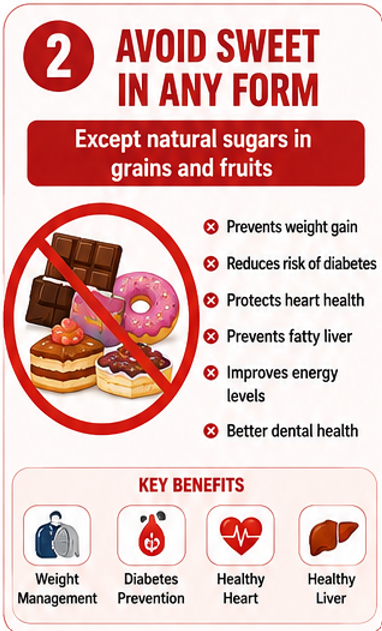
Reducing Added Sugars Is One of the Most Important Steps for Better Health
One of the most effective lifestyle changes for preventing obesity, diabetes, fatty liver disease, heart disease, and other lifestyle disorders is to reduce or avoid added sugars in all forms. Natural sugars present within whole fruits and grains are generally accompanied by fiber, vitamins, minerals, and other beneficial nutrients that support health.
1. Helps Prevent Weight Gain and Obesity
- Added sugars provide calories with little nutritional value.
- Sugary foods and drinks often do not create lasting fullness.
- Excess sugar intake encourages overconsumption of calories.
Benefit: Better weight management and reduced risk of obesity.
2. Reduces the Risk of Type 2 Diabetes
- Frequent consumption of sugary foods can cause repeated blood sugar spikes.
- Over time, the body may become less responsive to insulin.
- Reducing sugar helps improve blood glucose control.
Benefit: Lower risk of insulin resistance, prediabetes, and Type 2 diabetes.
3. Protects Heart Health
- High sugar intake is linked to increased triglycerides and unhealthy cholesterol patterns.
- Excess sugar consumption may contribute to high blood pressure and inflammation.
Benefit: Reduced risk of heart disease and stroke.
4. Helps Prevent Fatty Liver Disease
- Large amounts of sugar, particularly fructose-containing sweeteners, can be converted into fat in the liver.
- Excess sugar intake contributes to fat accumulation within liver cells.
Benefit: Better liver health and lower risk of fatty liver disease.
5. Improves Dental Health
- Sugars feed bacteria that produce acids in the mouth.
- These acids damage tooth enamel and contribute to cavities.
Benefit: Reduced risk of dental caries and gum disease.
6. Reduces Energy Crashes and Hunger
- Sugary foods often cause rapid rises and falls in blood glucose.
- This can lead to fatigue, cravings, and increased hunger.
Benefit: More stable energy levels throughout the day.
7. Helps Lower Inflammation
- Excessive sugar consumption has been associated with chronic low-grade inflammation.
- Inflammation contributes to many lifestyle diseases.
Benefit: Better overall metabolic and cardiovascular health.
8. Supports Healthy Aging
- High sugar intake may accelerate processes that damage proteins and tissues.
- Reducing sugar supports healthier skin, blood vessels, and organs.
Benefit: Better long-term health and quality of life.
Common Sources of Added Sugar
- Soft drinks and sweetened beverages
- Packaged fruit juices
- Sweets, chocolates, candies, and desserts
- Cookies, cakes, pastries, and biscuits
- Sweetened breakfast cereals
- Flavored yogurts
- Sweetened tea and coffee
- Ice creams and milkshakes
- Sweet syrups and sweet spreads
Healthier Alternatives
- Whole fruits instead of fruit juices
- Plain water instead of sugary beverages
- Unsweetened tea or coffee
- Fresh fruit for dessert
- Whole grains and high-fiber foods
- Nuts and seeds for snacks
Impact on Major Lifestyle Diseases
| Disease / Condition | Potential Benefit of Reducing Added Sugars |
|---|---|
| Obesity | Lower calorie intake and reduced weight gain |
| Type 2 Diabetes | Improved blood sugar control and insulin sensitivity |
| Heart Disease | Lower triglycerides and improved cardiovascular health |
| Fatty Liver Disease | Reduced liver fat accumulation |
| Hypertension | Indirect benefit through improved metabolic health |
| Dental Caries | Reduced tooth decay and gum disease |
Key Message
For most people, reducing or eliminating added sugars is one of the most powerful lifestyle modifications for preventing obesity, diabetes, fatty liver disease, cardiovascular disease, and metabolic syndrome. Choose whole fruits and naturally occurring carbohydrates in grains instead of sugary foods and beverages. Small daily reductions in sugar intake can lead to substantial long-term health benefits.
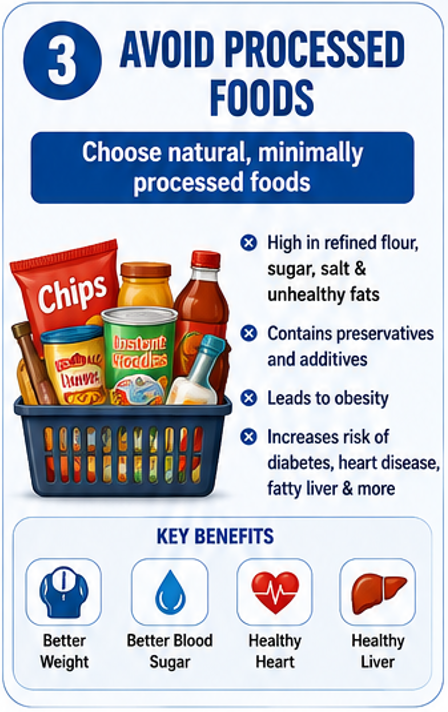
Limiting Processed and Ultra-Processed Foods Is Essential for Good Health
One of the most important lifestyle changes for preventing obesity, diabetes, heart disease, fatty liver disease, hypertension, and several chronic illnesses is to reduce the consumption of processed and ultra-processed foods. These products are often high in refined carbohydrates, unhealthy fats, excess salt, added sugars, artificial additives, preservatives, and flavor enhancers while being low in essential nutrients and fiber.
1. Helps Prevent Weight Gain and Obesity
- Processed foods are often high in calories but low in satiety.
- They encourage overeating due to added sugar, salt, and flavor enhancers.
- Portion sizes are often larger than necessary.
Benefit: Better weight management and reduced risk of obesity.
2. Supports Better Blood Sugar Control
- Many processed foods contain refined flour and added sugars.
- They are rapidly digested, causing blood sugar spikes.
- Frequent consumption may contribute to insulin resistance.
Benefit: Reduced risk of prediabetes and Type 2 diabetes.
3. Protects Heart Health
- Many processed foods contain excess sodium and unhealthy fats.
- Regular consumption may increase blood pressure and cholesterol levels.
- Highly processed diets are linked with cardiovascular disease.
Benefit: Lower risk of heart disease and stroke.
4. Helps Prevent Fatty Liver Disease
- Excess sugars and refined carbohydrates are converted into fat in the liver.
- Ultra-processed foods are a major contributor to fatty liver disease.
Benefit: Better liver function and metabolic health.
5. Improves Gut Health
- Processed foods are often low in dietary fiber.
- Fiber is essential for healthy digestion and a balanced gut microbiome.
Benefit: Better digestion, bowel health, and nutrient absorption.
6. Reduces Inflammation
- Diets rich in ultra-processed foods are associated with chronic low-grade inflammation.
- Inflammation contributes to many chronic diseases.
Benefit: Improved overall health and disease prevention.
Common Examples of Processed and Ultra-Processed Foods
- Packaged chips and namkeen
- Instant noodles and packaged pasta meals
- Biscuits, cookies, cakes, pastries, muffins, and doughnuts
- White bread, burger buns, pizza bases, and bakery products
- Sugary breakfast cereals
- Soft drinks, sodas, energy drinks, and packaged fruit juices
- Ice creams and frozen desserts
- Chocolate bars, candies, toffees, and sweets
- Processed cheese products
- Packaged soups and ready-to-eat meals
- Frozen snacks and frozen processed foods
- Packaged sauces, ketchup, mayonnaise, and sweet spreads
- Sweetened yogurt and flavored milk drinks
- Processed meat products such as sausages, salami, nuggets, and hot dogs
- Fast foods such as burgers, pizzas, fries, and fried snacks
- Packaged protein bars and many commercial "health snacks"
Healthier Alternatives
- Fresh fruits and seasonal vegetables
- Whole grains such as millets, oats, brown rice, and whole wheat
- Homemade meals prepared from fresh ingredients
- Sprouts, legumes, and pulses
- Nuts and seeds
- Fresh curd and traditional homemade foods
- Coconut, roasted chana, and fresh salads
- Plain water, buttermilk, and unsweetened beverages
Impact on Major Lifestyle Diseases
| Disease / Condition | Potential Benefit of Reducing Processed Foods |
|---|---|
| Obesity | Lower calorie intake and improved satiety |
| Type 2 Diabetes | Better blood sugar control |
| Heart Disease | Reduced intake of unhealthy fats and sodium |
| Hypertension | Lower salt consumption |
| Fatty Liver Disease | Reduced intake of refined sugars and processed carbohydrates |
| Digestive Disorders | Higher fiber intake and better gut health |
Key Message
The majority of lifestyle diseases are strongly influenced by dietary choices. Processed and ultra-processed foods often contain excessive amounts of refined flour, sugar, unhealthy fats, salt, preservatives, and artificial additives.
Before buying a food item, ask yourself: "Did this come from nature, or from a factory?"
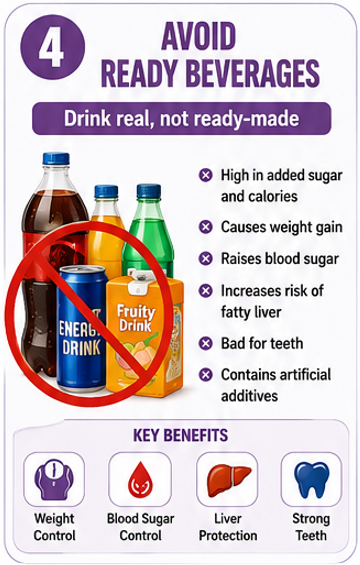
Avoiding Ready-to-Drink Beverages
Many commercially prepared beverages are marketed as refreshing, energizing, healthy, or convenient. However, most ready-to-drink beverages contain large amounts of added sugar, artificial sweeteners, preservatives, flavoring agents, colorants, caffeine, or excess calories. Regular consumption can contribute to obesity, diabetes, fatty liver disease, heart disease, and poor dental health.
1. Helps Prevent Weight Gain and Obesity
- Liquid calories are often consumed without creating a feeling of fullness.
- Many beverages contain large amounts of sugar and calories.
- People frequently underestimate the calories present in drinks.
Benefit of avoiding: Better weight management and reduced risk of obesity.
2. Supports Better Blood Sugar Control
- Sugary drinks cause rapid increases in blood glucose levels.
- Frequent consumption increases the workload on the body's insulin system.
- Sweetened beverages are among the major dietary contributors to Type 2 diabetes.
Benefit of avoiding: Improved blood sugar control and lower diabetes risk.
3. Helps Prevent Fatty Liver Disease
- Excess sugars in beverages are rapidly absorbed.
- Surplus sugar may be converted into fat and stored in the liver.
- Regular consumption is associated with increased risk of fatty liver disease.
Benefit of avoiding: Better liver health and metabolic function.
4. Protects Heart Health
- Frequent intake of sweetened beverages is linked to adverse cardiovascular outcomes.
- Excess sugar intake may increase triglycerides and promote inflammation.
Benefit of avoiding: Lower risk of heart disease and stroke.
5. Reduces Dental Problems
- Sugary and acidic beverages can damage tooth enamel.
- They promote dental cavities and gum disease.
Benefit of avoiding: Better oral and dental health.
6. Avoids Artificial Additives
- Many packaged beverages contain preservatives, flavor enhancers, colorants, and stabilizers.
- These ingredients provide little or no nutritional benefit.
Benefit of avoiding: Reduced exposure to unnecessary food additives.
Common Ready-to-Drink Beverages to Avoid or Limit
- Soft drinks and carbonated beverages
- Cola drinks
- Energy drinks
- Sports drinks
- Packaged fruit juices
- Fruit drinks and fruit concentrates
- Flavored milk beverages
- Sweetened cold coffee drinks
- Bottled iced tea
- Sweetened packaged lassi
- Sweetened packaged shakes
- Flavored water products
- Ready-to-drink protein beverages with added sugars
- Sweetened coconut water products
- Commercial mocktails and beverage mixes
Healthier Alternatives
- Plain drinking water
- Fresh coconut water (without added sugar)
- Unsweetened buttermilk
- Homemade lemon water without sugar
- Plain milk
- Unsweetened tea or coffee in moderation
- Fresh homemade vegetable soups
- Whole fruits instead of fruit juices
Impact on Major Lifestyle Diseases
| Disease / Condition | Potential Benefit of Avoiding Ready Beverages |
|---|---|
| Obesity | Reduced liquid calorie consumption |
| Type 2 Diabetes | Better blood sugar regulation |
| Fatty Liver Disease | Lower sugar intake |
| Heart Disease | Improved metabolic health |
| Dental Caries | Reduced exposure to sugars and acids |
| Metabolic Syndrome | Improved weight and glucose control |
Key Message
Many ready-to-drink beverages contain hidden sugars, excess calories, artificial ingredients, and additives that contribute to obesity, diabetes, fatty liver disease, and heart disease. Choosing water and simple homemade beverages can significantly improve long-term health and reduce the risk of lifestyle diseases.
Drink your calories as little as possible. Eat fruits, don't drink them. Water should be your first choice whenever you are thirsty.
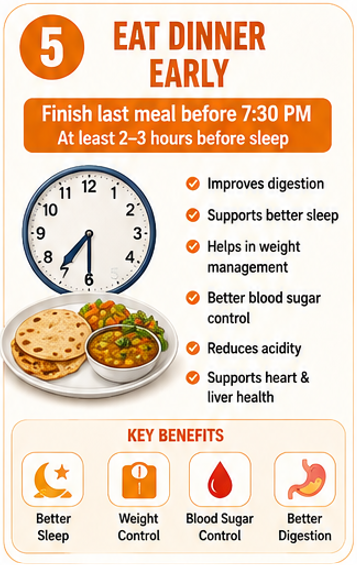
Why Finishing Your Last Meal Before 7:30 PM Can Improve Health and Help Prevent Lifestyle Diseases
The timing of meals is increasingly recognized as an important factor in maintaining good health. Finishing dinner early—ideally before 7:30 PM and at least 2–3 hours before bedtime—allows the body sufficient time to digest food and align eating patterns with natural biological rhythms.
1. Supports Better Weight Management
- Late-night eating is often associated with excess calorie intake.
- Early dinners naturally reduce unnecessary snacking.
- Longer overnight fasting periods may support healthy metabolism.
Benefit: Helps prevent weight gain and obesity.
2. Improves Blood Sugar Control
- The body's ability to process glucose is generally better earlier in the day.
- Late meals may lead to higher blood sugar levels overnight.
- Earlier dinners may improve insulin sensitivity.
Benefit: Reduced risk of insulin resistance and Type 2 diabetes.
3. Promotes Better Sleep Quality
- Going to bed with a full stomach may disturb sleep.
- Digestion can interfere with the body's natural sleep processes.
- Early dinners allow the digestive system to settle before bedtime.
Benefit: More restful and refreshing sleep.
4. Reduces Acid Reflux and Indigestion
- Lying down soon after eating increases the risk of acid reflux.
- Late-night meals are a common trigger for heartburn.
- Earlier dinners give the stomach time to empty before sleep.
Benefit: Reduced acidity, reflux, and digestive discomfort.
5. Supports Heart Health
- Late-night eating has been linked to adverse metabolic effects.
- Earlier meals may help maintain healthier blood pressure and lipid levels.
Benefit: Better cardiovascular health.
6. Encourages Natural Circadian Rhythms
- The body follows a biological clock that regulates metabolism.
- Eating late may disrupt these natural rhythms.
- Early meals are more aligned with the body's internal clock.
Benefit: Improved metabolic efficiency and overall wellbeing.
7. Supports Liver and Metabolic Health
- Long overnight fasting periods allow the body to shift from digestion to repair and maintenance.
- Metabolic processes may function more efficiently when meals are completed earlier.
Benefit: Better metabolic and liver health.
8. Helps Develop Healthy Eating Habits
- Planning dinner earlier encourages structured meal timings.
- Reduces mindless eating while watching television or using mobile devices.
- Promotes mindful eating and portion control.
Benefit: Long-term healthy lifestyle habits.
Practical Tips
- Finish dinner by 7:30 PM whenever possible.
- Keep dinner lighter than lunch.
- Avoid late-night snacks and sugary beverages.
- Maintain at least 2–3 hours between dinner and bedtime.
- Choose vegetables, pulses, whole grains, and protein-rich foods for dinner.
- Avoid heavy fried and processed foods in the evening.
Impact on Major Lifestyle Diseases
| Disease / Condition | Potential Benefit of Early Dinner |
|---|---|
| Obesity | Reduced calorie intake and improved metabolism |
| Type 2 Diabetes | Better blood sugar regulation |
| Fatty Liver Disease | Improved metabolic health |
| Heart Disease | Better cardiovascular risk profile |
| GERD / Acid Reflux | Reduced reflux symptoms and heartburn |
| Sleep Disorders | Improved sleep quality |
Key Message
Finishing your last meal before 7:30 PM is a simple, cost-free lifestyle modification that can improve digestion, enhance sleep quality, support healthy weight management, improve blood sugar control, and reduce the risk of several lifestyle diseases.
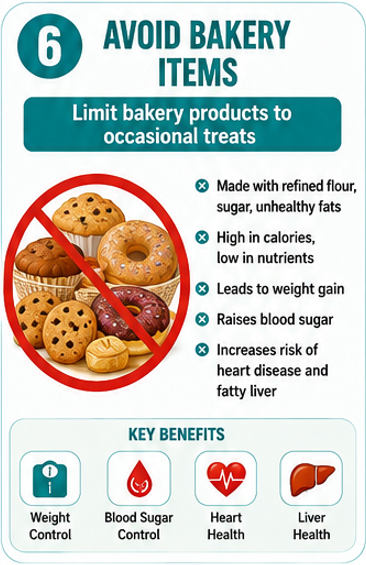
Limiting Bakery Products Can Improve Health
Many bakery products such as biscuits, cookies, cakes, pastries, puffs, doughnuts, muffins, cream rolls, and commercially baked snacks are highly processed foods. They often contain refined flour (maida), added sugars, unhealthy fats, excess salt, preservatives, and artificial additives that may contribute to obesity, diabetes, heart disease, and other lifestyle disorders.
1. Helps Prevent Weight Gain
- Most bakery products are calorie-dense and nutrient-poor.
- They are easy to overeat because they provide little lasting fullness.
- Many contain combinations of refined flour, sugar, and fat that encourage excess calorie intake.
Benefit: Better weight management and reduced risk of obesity.
2. Supports Better Blood Sugar Control
- Refined flour is rapidly digested and absorbed.
- Many bakery foods have a high glycemic load.
- Frequent consumption can contribute to blood sugar fluctuations.
Benefit: Reduced risk of insulin resistance, prediabetes, and Type 2 diabetes.
3. Reduces Risk of Heart Disease
- Many baked snacks contain unhealthy fats and excess sodium.
- Regular consumption may contribute to elevated cholesterol and blood pressure.
- Highly processed foods are associated with increased cardiovascular risk.
Benefit: Better heart and blood vessel health.
4. Lowers Risk of Fatty Liver Disease
- Bakery products often contain both refined carbohydrates and added sugars.
- Excess intake promotes fat accumulation in the liver.
Benefit: Improved liver health and metabolic function.
5. Improves Digestive Health
- Most bakery products contain very little dietary fiber.
- Low-fiber diets may contribute to constipation and poor gut health.
Benefit: Better bowel function and digestive wellness.
6. Reduces Hidden Sugar Consumption
- Biscuits, cookies, cakes, and pastries often contain large amounts of added sugar.
- Many people underestimate the sugar content of these foods.
Benefit: Better blood sugar control and lower calorie intake.
7. Reduces Intake of Ultra-Processed Foods
- Commercial bakery items often contain preservatives, emulsifiers, artificial flavors, and stabilizers.
- Regular intake of ultra-processed foods has been linked with several chronic diseases.
Benefit: Improved long-term metabolic health.
Common Bakery Products to Limit
- Biscuits and cookies
- Cakes and pastries
- Cream rolls
- Doughnuts
- Patties and puffs
- Muffins and cupcakes
- Sweet buns
- Bakery rusks
- Commercial pizza bases and garlic breads
- Packaged baked snacks
Healthier Alternatives
- Fresh fruits
- Roasted chana
- Unsalted nuts and seeds
- Homemade whole-grain snacks
- Sprouts and salads
- Traditional homemade foods prepared with whole grains
- Fresh coconut pieces
- Boiled legumes and pulses
Impact on Major Lifestyle Diseases
| Disease / Condition | Potential Benefit of Limiting Bakery Products |
|---|---|
| Obesity | Reduced calorie intake and improved weight control |
| Type 2 Diabetes | Improved blood sugar management |
| Heart Disease | Lower intake of unhealthy fats and processed foods |
| Fatty Liver Disease | Reduced intake of refined carbohydrates and sugars |
| Hypertension | Lower sodium consumption |
| Digestive Disorders | Higher fiber intake from healthier alternatives |
Key Message
Most bakery products are highly processed foods made primarily from refined flour (maida), added sugars, unhealthy fats, and excess salt.
If it comes in a bakery packet, treat it as an occasional indulgence—not a daily food.